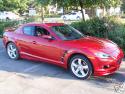
RX-8 Fuel Rant

Talk about your Rotaries!
User avatar
Renesis Rx
Senior Member
Posts: 315
Joined: Tue Jul 01, 2008 9:14
Location: Colorado Springs
Contact:

Postby Renesis Rx » Tue Jul 22, 2008 9:14

<div class='quotetop'>QUOTE (Huzer21 @ Jul 22 2008, 12:45 PM) [url=index.php?act=findpost&pid=57607]<{POST_SNAPBACK}>[/url]</div>
I was referring to the "richer" comment from Renesis Rx. The cars run rich at any altitude, not just here. And the reason economy would be worse here is because of the air density, not that the car is running any richer than at sea level. The ECU ST/LT FT help adjust, but they only adjust to the factory specs of, well, already running rich. And car manufacturer defaults at rich. Less risk of boom-boom club.

My standard Cobb tune has produced marginally better mileage. Probably 1-2 mpg, at best. But hey, I've run it a little harder since I received the AP, so better mileage under harsher circumstances is ok in my book.[/b]


Thats what I was tyrying to say. Probably didnt word it right. The less air or less dense are will cause you to burn more fuel because like you said, it only goes as far as the specs allow. You would have to retune your ECU to get the right fuel/air mixture for this altitude. Dont know whats wrong with my tank then cause the most I've ever gotten in the tank even on dead empty was about 14. I know about fuel vapor expansion but that's a little much.
Renesis...MMMMMMMMM

User avatar
AIM WO4
Posts: 2049
Joined: Thu Sep 21, 2006 9:14
Location: Highlands Ranch
Contact:

Postby AIM WO4 » Tue Jul 22, 2008 9:14

LOL... It takes more energy to push a car through denser air at sea level than through the thin air at altitude. So you need less gas at altitude and less HP to move the car at the same speed as when you are at sea level. When you drive into the ocean, you really need a lot of fuel to push the car.

At 5280 feet, we have about 82% the air density compared to sea level. A car that uses 87 octane at sea level, uses 85 in Denver. Take that tank of gas down to sea level, and you are going to see a drop in gas mileage. Put the 87 in at sea level and give the car time to adjust, and it should equalize. This would be under PERFECT conditions.

There are manyfactorsinvolved: temperature, barometric pressure and humidity.

One thing I always notice on my trips is the effect of wind.

Mix hot air and high altitude, and you have a VERY BAD turbo day!
AIM WO4
[color=#339966][font=Microsoft Sans Serif][color=gray]CMZƆ[/color][/color][/font]
[size=75]2012 Sinful Sallow, Evo X GSR[/SIZE]
Image
Image

User avatar
Buffalo
Posts: 693
Joined: Wed Oct 17, 2007 9:14
Location: Arvada
Contact:

Postby Buffalo » Tue Jul 22, 2008 9:14

<div class='quotetop'>QUOTE (AIM WO4 @ Jul 22 2008, 04:29 PM) [url=index.php?act=findpost&pid=57654]<{POST_SNAPBACK}>[/url]</div>
Mix hot air and high altitude, and you have a VERY BAD turbo day![/b]


Mix cold wet air and 1.3L of power, and you have a vary good RX day.
05 RX-8 RB revi (ram air) intake. ACT prolight flywheel. Clutch Masters stage 1. Axialflow short shifter. Tinted windows.
255 (f) Dunlap 275® Bridgestone

Up Next: Project RX-8!

User avatar
GR-8
Posts: 5335
Joined: Thu Oct 11, 2007 9:14
Location: Denver/ Lakewood
Contact:

Postby GR-8 » Tue Jul 22, 2008 9:14

So true Angelo

<div class='quotetop'>QUOTE (AIM WO4 @ Jul 22 2008, 04:29 PM) [url=index.php?act=findpost&pid=57654]<{POST_SNAPBACK}>[/url]</div>
LOL... It takes more energy to push a car through denser air at sea level than through the thin air at altitude. So you need less gas at altitude and less HP to move the car at the same speed as when you are at sea level. When you drive into the ocean, you really need a lot of fuel to push the car.

At 5280 feet, we have about 82% the air density compared to sea level. A car that uses 87 octane at sea level, uses 85 in Denver. Take that tank of gas down to sea level, and you are going to see a drop in gas mileage. Put the 87 in at sea level and give the car time to adjust, and it should equalize. This would be under PERFECT conditions.

There are manyfactorsinvolved: temperature, barometric pressure and humidity.

One thing I always notice on my trips is the effect of wind.

Mix hot air and high altitude, and you have a VERY BAD turbo day![/b]


So with that statement we should be running faster 1/4 mile times up here. But that's not the case. We produce less power up here so we us more fuel to get going than sea level cause of the lack of power.
Image

ImageImage

Billman
Senior Member
Posts: 132
Joined: Thu Nov 29, 2007 9:14
Location: Planet Earth
Contact:

Postby Billman » Tue Jul 22, 2008 9:14

Here is my take on the elevation/fuel thing.

If all things were equal except for altitude, a vehicle will use less fuel over a given distance at higher elevation. The reason for that is that is because there is less O2 in the air, and therefore you would need less fuel to maintain the optimum air/fuel mixture. If your sensors are working properly they will adjust the fuel mixture (leaner for higher altitude) to maintain and keep the air/fuel mixture the same no matter what your altitude - temperature - humidity and whatever else it will need to keep your engine running the best.

We produce less power because we can only draw in a given amount of air. Within "our" air is less oxygen. Less oxygen means that we need a lower amount of fuel to maintain the optimum air/fuel mixture (increasing fuel alone will only cause a too rich condition, not better performance). Since we have a lower amount of fuel in our combustion chamber we will get less bang when it ignights. We use less fuel (and take longer) to cover a certain distance than at sea level. You will probably use more fuel if you attempted to cover the same distance in the same time frame as if you were at sea level. But to do that you have to be able equal the bang you get when at sea level, and the only way to do that is to increase the volume of air going into the combustion chamber (turbo, suercharger, blower, ect). But then, things are no longer equal and the whole argument goes out the window.

Here is why I really know it to be true. I pull about 30 mpg highway normally. While in California, I was pulling about 27.5 mpg. Once I got back to the high country, back to 30 mpg again.
Image

User avatar
AIM WO4
Posts: 2049
Joined: Thu Sep 21, 2006 9:14
Location: Highlands Ranch
Contact:

Postby AIM WO4 » Tue Jul 22, 2008 9:14

No, no, no... All things aren't equal. I was joking around. Rolling resistance is the same, but we have less HP available to us due to other factors. Wind resistance is less, but may not be proportional to the loss of other factors.

If we did have some freak day here where everyhting ws optimal for how cars are designed, then we'd be equal despite less HP.

I was playing "Devil" with my post. You know... sarcasm?

<div class='quotetop'>QUOTE (Greek8 @ Jul 22 2008, 04:59 PM) [url=index.php?act=findpost&pid=57662]<{POST_SNAPBACK}>[/url]</div>
So true Angelo


So with that statement we should be running faster 1/4 mile times up here. But that's not the case. We produce less power up here so we us more fuel to get going than sea level cause of the lack of power.[/b]
AIM WO4

[color=#339966][font=Microsoft Sans Serif][color=gray]CMZƆ[/color][/color][/font]

[size=75]2012 Sinful Sallow, Evo X GSR[/SIZE]

Image

Image

User avatar
AIM WO4
Posts: 2049
Joined: Thu Sep 21, 2006 9:14
Location: Highlands Ranch
Contact:

Postby AIM WO4 » Tue Jul 22, 2008 9:14

And fuel economy shoud be slightly better for us. We suffer power loss.

<div class='quotetop'>QUOTE (Billman @ Jul 22 2008, 09:09 PM) [url=index.php?act=findpost&pid=57704]<{POST_SNAPBACK}>[/url]</div>
Here is my take on the elevation/fuel thing.

If all things were equal except for altitude, a vehicle will use less fuel over a given distance at higher elevation. The reason for that is that is because there is less O2 in the air, and therefore you would need less fuel to maintain the optimum air/fuel mixture. If your sensors are working properly they will adjust the fuel mixture (leaner for higher altitude) to maintain and keep the air/fuel mixture the same no matter what your altitude - temperature - humidity and whatever else it will need to keep your engine running the best.

We produce less power because we can only draw in a given amount of air. Within "our" air is less oxygen. Less oxygen means that we need a lower amount of fuel to maintain the optimum air/fuel mixture (increasing fuel alone will only cause a too rich condition, not better performance). Since we have a lower amount of fuel in our combustion chamber we will get less bang when it ignights. We use less fuel (and take longer) to cover a certain distance than at sea level. You will probably use more fuel if you attempted to cover the same distance in the same time frame as if you were at sea level. But to do that you have to be able equal the bang you get when at sea level, and the only way to do that is to increase the volume of air going into the combustion chamber (turbo, suercharger, blower, ect). But then, things are no longer equal and the whole argument goes out the window.

Here is why I really know it to be true. I pull about 30 mpg highway normally. While in California, I was pulling about 27.5 mpg. Once I got back to the high country, back to 30 mpg again.[/b]
AIM WO4

[color=#339966][font=Microsoft Sans Serif][color=gray]CMZƆ[/color][/color][/font]

[size=75]2012 Sinful Sallow, Evo X GSR[/SIZE]

Image

Image

User avatar
T-time
Senior Member
Posts: 687
Joined: Mon Jan 07, 2008 9:14
Location: colorado springs
Contact:

Postby T-time » Tue Jul 22, 2008 9:14

i sat here trying to explain exactly this for a half hour... then i gave up... glad someone read my mind lol
[size=84]Reclaim the Republic. Restore the Constitution.[/SIZE]

User avatar
goldrocket
Posts: 857
Joined: Wed Oct 31, 2007 9:14
Location: Colorado Springs
Contact:

Postby goldrocket » Wed Jul 23, 2008 9:14

My RX-7 is heavily modified with dual carbs. So I don't even have the advantage of an engine management system. But this car is also faster then the 69 camaro I owned. That car had a 330 hp, blueprinted and balanced 327 under the hood. And it get's better mileage. Ever since I put the car on the dyno and actually tuned the carbs properly I have been getting 17-18 in the city. My Camaro got about 15 on a good day. Plus the RX-7 handles a lot better. Don't get me wrong, I loved my commode, but if jackass people who don't have all the informtion for a proper comparison are going to rip on our little engines that can ond do, then they can kiss my entire ass!!!!!!!!!
Al says
Anything worth doing is worth overdoing!:eek:

Image

User avatar
Rootski
Posts: 34
Joined: Sun Jul 27, 2008 9:14
Location: USAFA
Contact:

Postby Rootski » Sun Jul 27, 2008 9:14

The way the cycles are set up, it's actually more like a 2.6 liter. Still, I get about 22 mpg mixed driving. I'll take that.

User avatar
Ranger
Senior Member
Posts: 624
Joined: Mon Jun 30, 2008 9:14
Location: Denver
Contact:

Postby Ranger » Tue Jul 29, 2008 9:14

Rootski, isn't actually more like 3.9L? I've always heard it argued that for each rotor, it's the same as three pistons, since there are three combustion cycles taking place in one chamber. So it'd be comparable to a 3.9L V6 piston engine. It's only rated a 1.3L engine because rotary motors can't be measured the same way as a piston engine would. Even so, the EPA ratings are much worse than most comparable piston engines.

I'm somewhat surprised to hear that you guys get such bad mileage in your 8s. In my FD, I get around 16-18 in town, and mid 20s on the highway.

As for MPG at sea level vs. at altitude...I have gotten better gas mileage up here with all my n/a cars than I have at sea level. With the FD though, it didn't seem to make much of a difference. Which makes sense because turbo motors are much less affected by the thinner air. However I did notice the loss in power, so I don't know.

User avatar
goldrocket
Posts: 857
Joined: Wed Oct 31, 2007 9:14
Location: Colorado Springs
Contact:

Postby goldrocket » Wed Jul 30, 2008 9:14

Oh sure, get technical about how many combustion chambers we have... LOL! It still only displaces 1.3 liters in one eccentric shaft rotation. LOL!! Some racers and sanctioning bodies have even considered them cheater motors in the past.
Al says
Anything worth doing is worth overdoing!:eek:

Image

User avatar
GTConversion
Senior Member
Posts: 176
Joined: Wed Oct 15, 2008 9:14
Location: Colorado Springs

Postby GTConversion » Wed Oct 15, 2008 9:14

To bump a three month old thread, I got 25 mpg solid in a stock '04 RX-8 for almost 1400 miles straight, all the way from sea level Monterey, CA to Copper Mountain, CO where I made my last pit stop. It actually jumped to 27 through Utah, but I'm not really sure why.

Around town I'm getting dramatically less, but 25 MPG highway isn't shabby.

User avatar
Low Impedance
Posts: 311
Joined: Sat Aug 09, 2008 9:14
Location: Colorado Springs, CO
Contact:

Postby Low Impedance » Wed Oct 15, 2008 9:14

but the rotary ISNT a piston engine. Its not as efficient. Period. Plus, its a damn sports car. That is why you bought it.
:1b705a82:1988 Rx7 Convertible: Current DD

:2b1a0ffc: 1987 Rx7 Turbo II: motor down as of 10/28/08

WWW.RCCDIGIZINE.COM
Image

User avatar
GTConversion
Senior Member
Posts: 176
Joined: Wed Oct 15, 2008 9:14
Location: Colorado Springs

Postby GTConversion » Wed Oct 15, 2008 9:14

Oh no no, I'd bought the car with the assumption that I'd get 10-15. It's a sports car. I just think that 25 MPG consistently over 1400 miles is just ANOTHER great thing about our awesome sports cars :)


Return to “Rotary Vehicle”

Who is online

Users browsing this forum: Bing [Bot] and 100 guests